Local SEO for dermatologists is the process of improving a dermatology practice’s visibility in Google Maps, the Local Pack, and localized organic search results so nearby patients can find medical and cosmetic skin care services.
Effective local SEO for dermatology practices combines Google Business Profile optimization, location-specific website content, NAP consistency, local citations, patient reviews, structured data, and authoritative backlinks to strengthen Google’s ranking signals for relevance, distance, and prominence.
Board-certified dermatologists offering services such as acne treatment, eczema care, psoriasis management, Mohs surgery, skin cancer screening, Botox, and laser procedures benefit from pages that match patient search intent and geographic location.
A comprehensive local SEO strategy helps dermatology clinics attract qualified local patients, increase appointment bookings, improve online reputation, and compete more effectively in both Google Maps and traditional organic search.
Why Does Local SEO Matter for a Dermatology Practice?
Local SEO reaches people at the moment they choose a provider. BrightLocal’s Local Consumer Review Survey 2026 asked a panel of 1,002 US adults about this. It found 97 percent read reviews for local businesses before deciding.
1. Reaching High-Intent Patients Within Your Service Radius
Local searches signal intent to act soon. Someone typing “skin cancer screening near me” plans to call. That intent beats raw traffic. A sunscreen blog post may pull readers from other states. A treatment page ranking in your city pulls calls from people who can drive to you.
2. A Lower Cost Per Patient Than Paid Ads
Local SEO usually costs less per patient over time because traffic does not stop when payment stops. Ads bill per click. Rankings keep working after the spend ends. The trade-off is speed: ads produce calls this week, while SEO takes months to build.
3. Competing With Med Spas and Cosmetic Chains
Med spas often outrank dermatologists for cosmetic terms because they publish more service pages and collect reviews faster. Dermatologists have the stronger credential story but rarely put it online. Compete by being specific. Name the device. Name the physician. List certification and fellowship training on the treatment page.
4. Winning Both Medical and Cosmetic Search Intent
You win both by separating them on the site. Keep insurance and referral details on medical pages. Keep pricing ranges, consultation offers, and photos on cosmetic pages. One blended page usually ranks for neither.
How Does Google Decide Which Dermatologists to Show Locally?
Google ranks local results on relevance, distance, and prominence, according to Google Business Profile Help. Relevance is how well your profile matches the search. Distance is how far you sit from the searcher. Prominence is how well known your practice is. You cannot move the building, but you control the other two.
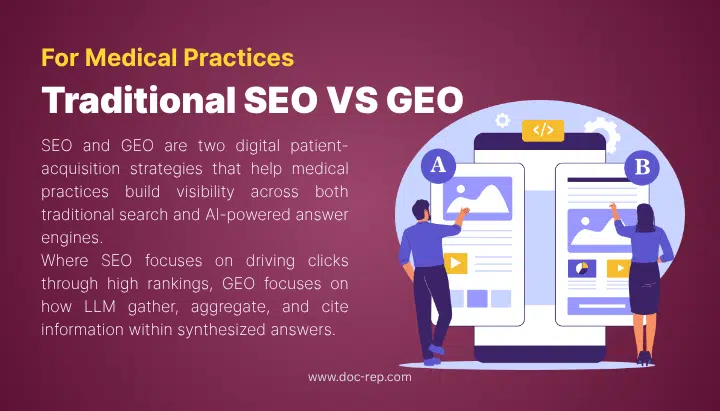
The Local Map Pack vs. Organic Results
The map pack is the block of listings shown with a map, usually three results. Organic results are the standard links below it. The two run on related but separate signals.
| Factor | Map pack | Organic results |
| Main asset | Google Business Profile | Website pages |
| Distance from searcher | Direct effect | Weak effect |
| Reviews | Strong effect | Indirect effect |
| Content depth | Limited effect | Strong effect |
| Backlinks | Supporting effect | Strong effect |
| Fastest lever | Profile data, reviews | Treatment, location pages |
Most practices need both. The map pack captures “near me” searches. Organic results capture longer questions such as “what does eczema on hands look like.”
Relevance, Distance, and Prominence
Relevance comes from your categories, services, description, and website content. A profile listing only “Doctor” tells Google little. Distance comes from your verified address and the searcher’s location. Prominence comes from reviews, links, and mentions across the web. Google states that more reviews and positive ratings can help local ranking.
Why E-E-A-T Standards Are Stricter for Skin Care Content
Skin care sits inside what Google calls Your Money or Your Life topics, so raters apply higher quality standards. Google’s Search Quality Rater Guidelines, updated September 11, 2025, ask raters to judge Experience, Expertise, Authoritativeness, and Trust. Raters also expect medical content to match expert consensus. So use named authors, a dated reviewer line, and clear contact details.
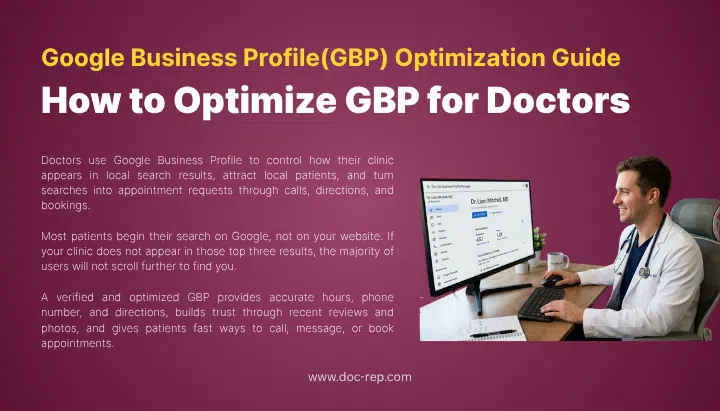
How Do You Optimize Your Google Business Profile?
Fill every field with accurate, specific data and keep it current. Google says businesses with complete and accurate information are more likely to appear in local results. Verify the listing first, since an unverified profile often carries wrong hours you cannot fix.
Choosing the Right Primary and Secondary Categories
Set “Dermatologist” as the primary category when medical dermatology drives revenue, because it carries the most weight. Add secondary categories for real services, such as Skin Care Clinic or Laser Hair Removal Service. Google’s guidelines say one practitioner should not keep separate profiles for each specialty.
Listing Your Treatments as Services
Add each treatment as a named service with a short description. Write them the way patients speak. “Mole removal” and “skin cancer screening” pull more searches than “excisional biopsy” and “cutaneous oncology surveillance.” Include both wordings when both apply.
Photos, Hours, and Appointment Links
Post real photos of the building, entrance, parking, and staff, since patients use them to confirm they found the right place. Keep hours accurate, including holidays, and link to your own scheduler. Broken links push patients to call, and many will not.
Using Google Posts
Google Posts publish short updates on the profile. Use them for new providers, new devices, screening events, and appointment openings. Post regularly to show that your practice is active and to highlight timely services, seasonal skin care tips, or community events.
How Do You Find the Right Local Keywords?
Combine what you treat with how patients name it and where they live. Start with your own appointment data, then check search tools for wording and volume.
Condition, Treatment, and “Near Me” Keyword Types
Condition terms describe a problem, such as “psoriasis treatment.” Treatment terms name a procedure, such as “Mohs surgery.” Proximity terms add “near me,” a city, or a neighborhood. Condition terms suit teaching pages. Treatment terms suit service pages. Proximity terms belong on service and location pages.
Mapping Keywords to the Right Page
Assign one primary search term to one page. Two pages targeting “acne treatment [city]” compete and split their signals. Build a sheet with four columns: search term, page URL, page type, current rank. Update it monthly to prevent near-duplicate pages.
Finding Gaps Your Local Competitors Missed
Look at what nearby practices rank for and what they never wrote about. Common gaps include pediatric dermatology, skin conditions in darker skin tones, hidradenitis suppurativa, and insurance questions. Also check terms where no dermatologist appears in the map pack, since those often return med spas or urgent care.
How Should You Structure Your Website for Local Search?
Structure the site so each page answers one question for one audience. A workable shape: homepage, treatment pages, condition pages, provider pages, location pages, and a blog that links back to all of them.
Optimizing the Homepage for Your Primary City
Name your city in the homepage title tag, the first paragraph, and the footer address. The specialty and location should be obvious within a few seconds. Do not stuff city names beyond that.
Building a Dedicated Page for Each Treatment
Give every treatment its own page. Use the same structure each time: what it treats, how it works, who performs it, recovery, cost range, how to book. Thin pages of 150 words rarely rank. Pages that answer consult-room questions usually do.
When Do You Need Location-Specific Landing Pages?
Create a location page for every office you physically operate. A page titled “Dermatologist in [suburb]” with generic copy and no office there tends to rank poorly and can look deceptive. If you draw patients from a nearby town, write about that honestly: directions, parking, travel time.
Writing Title Tags, Meta Descriptions, and Headings
Write the title tag as treatment plus city plus practice name, under roughly 60 characters. Meta descriptions do not rank pages, but they affect clicks, so state the benefit and the action in about 150 characters. Use one H1 per page, then headings that match patient questions.
Featuring Provider Bios and Credentials
Give each physician a page listing board certification, medical school, residency, fellowship, hospital affiliations, and years in practice. These pages carry the trust signals raters look for. Link every provider page from the treatments they perform, so a Mohs surgery reader reaches the surgeon in one click.
Which Technical SEO Fixes Have the Biggest Local Impact?
Mobile speed, structured data, and clean crawling move the most. Patients search on phones and leave slow pages.
Mobile Experience and Page Speed
Aim for Google’s Core Web Vitals marks. Largest Contentful Paint under 2.5 seconds. Interaction to Next Paint under 200 milliseconds. Cumulative Layout Shift under 0.1. Google measures these from real Chrome users at the 75th percentile. Interaction to Next Paint replaced First Input Delay in March 2024. Compress galleries, drop unused scripts, and set image sizes.
Local Business and Physician Schema Markup
Add structured data with schema.org types built for medicine. Use MedicalClinic for the practice and Physician for provider pages. Include name, address, phone, hours, map coordinates, and specialty. Mark up each office on its own. Then test the code in Google’s Rich Results Test before it goes live.
Crawl Errors, Broken Links, and Site Security
Run a crawl every quarter and fix what it finds: broken links, redirect chains, duplicate title tags, pages blocked in robots.txt. Serve the site over HTTPS, confirm patient forms post to a secure endpoint, and review tracking pixels on pages that reveal a condition.
How Do You Build Local Citations and Directory Listings?
Citations are mentions of your name, address, and phone number on other sites. They support prominence and help patients confirm the practice is real.
Keeping NAP Details Consistent Everywhere
Write your name, address, and phone number once, in one exact format, then copy that format everywhere. Decide on “Suite 200” versus “Ste 200” and never mix them. Conflicting data is the problem, not the abbreviation itself.
Which Medical Directories Are Worth Your Time?
Start with the sites patients use, and insurers check. That list includes Healthgrades, Vitals, WebMD Care, Zocdoc, Yelp, Apple Maps, RealSelf, and Bing Places. Add your insurance plan directories and the American Academy of Dermatology’s Find a Dermatologist tool. BrightLocal’s 2026 survey found consumers consult an average of six review sites before choosing a business.
Cleaning Up Duplicate and Outdated Listings
Search your practice name, each provider name, and each old address, then record every listing. Duplicates usually come from old suite numbers, closed offices, and departed physicians. Claim what you can and request removal or merging for the rest.
How Do You Get More Patient Reviews Without Breaking HIPAA?
Ask every patient the same neutral way. Never confirm in public that a reviewer is a patient. HIPAA does not stop you from asking for reviews. It stops you from sharing protected health information in public.
Asking for Reviews the Compliant Way
Ask at checkout, then send a text or email with a direct review link. Keep the message plain so it reveals nothing about the visit. Do not offer discounts or gifts. The FTC rule on consumer reviews took effect October 21, 2024. It bars payment tied to reviews that express a set opinion.
How Should You Respond to Negative Reviews?
Respond briefly, without confirming care, and move the conversation offline. A safe reply thanks the reviewer, says the practice takes concerns seriously, and gives a phone number for the office manager. Never mention a diagnosis, visit date, billing dispute, or whether the person was seen. Assign one trained responder.
Displaying Testimonials on Your Website
Publish testimonials only with signed written authorization naming the exact use. Keep it on file and honor withdrawal requests. Before-and-after photos need the same permission, plus a note on whether results are typical.
How Do You Earn Local Backlinks as a Dermatologist?
Earn local links by doing things in your community that local publishers want to cover. Links from nearby sites support prominence and reinforce your geography.
Community Sponsorships and Local Partnerships
Sponsor a school sports team, a 5K, or a sun safety day at a public pool. Most groups list sponsors with a link. Partner with businesses that share your patients: gyms, salons, swim clubs, oncology and pediatric practices. Offer a free skin check event and ask the partner to post about it.
Press, Expert Commentary, and Medical Citations
Offer local reporters a named expert for seasonal stories on sunburn, tick bites, poison ivy, and winter dry skin. Reporters need a credentialed source on deadline. Publish original observations from your practice too, such as anonymized screening patterns by season. Original material earns citations. Rewritten health content does not.
What Local Content Should a Dermatology Practice Publish?
Publish content that answers what patients ask before they call. The best source is your own phone log.
Answering the Skin Questions Patients Search For
Write pages for plain questions. How do you tell a mole from a freckle? What does basal cell carcinoma look like? Is eczema contagious? How long does isotretinoin take to work? Have a physician review each page, then add the reviewer’s name and date.
Seasonal and Location-Relevant Topics
Match content to your climate and calendar. A Phoenix practice writes about sun damage and heat rash. A Minneapolis practice writes about winter eczema. Publish six to eight weeks before the season starts so the page has time to rank.
Before-and-After and Case Study Content
Photo galleries convert cosmetic patients better than copy alone. Use consistent lighting, angles, and intervals, and label each set with treatment, sessions, and time elapsed. Mark composite or illustrative examples clearly so nobody mistakes them for a specific patient.
How Should Multi-Location Dermatology Practices Handle Local SEO?
Treat every office as its own local business with its own profile, page, and reviews. Locations sharing one page compete for the same searches.
Separate Profiles, Pages, and Review Streams
Create one verified profile per office, each with its own address, phone number, hours, and photos. Google’s guidelines also allow a public-facing doctor to hold a profile, as long as patients can reach that doctor at the verified address. That helps when people search by physician name. Route each office’s review requests separately.
Avoiding Duplicate Content Across Locations
Write unique copy for every location page. Include the providers there, the services offered there, parking and transit details, insurance accepted, and location-specific photos. If two pages could swap cities without anyone noticing, both are too thin.
How Do You Measure Local SEO Performance?
Measure outcomes that map to appointments. Rankings matter only when they produce calls and bookings.
Metrics That Actually Signal New Patients
Track calls from the Business Profile, direction requests, booking link clicks, form submissions by page, and new patient appointments by source. Add one front desk measure: the share of new patients who name the website or Google when asked how they found you.
Tools for Tracking Rankings, Calls, and Bookings
Use Business Profile reports for calls, direction requests, and search terms. Use Search Console for organic queries and index problems, and Analytics 4 for page conversions. Add a grid-based rank tracker to see how position changes with distance. Keep one call tracking policy so numbers do not break your citations.
How Long Does Local SEO Take to Work for Dermatologists?
Expect early movement in one to three months and meaningful new patient volume in six to twelve. Profile fixes and review growth can shift map results within weeks. Content and links take longer. Three factors change the timeline: how competitive your city is, how healthy your site is, and how fast you collect reviews.
What Does Dermatology Local SEO Typically Cost?
Costs vary widely by market and scope, so treat published averages with caution. Pricing usually takes one of three shapes: a monthly retainer, a project fee for a rebuild, or an hourly rate. Ask what the fee covers: pages written, listings managed, review responses handled, reports delivered.
Questions to Ask Before Signing With an Agency
Ask which dermatology clients they have worked with. Ask to contact one. Ask who writes the clinical content and whether a doctor reviews it. Ask how they handle HIPAA in review replies. Then ask who owns the site, domain, profile, and content if you part ways. The answer should always be the practice.
What Local SEO Mistakes Cost Dermatologists the Most Patients?
The most expensive mistakes are quiet. They trigger no warning, and the practice notices only when calls drop. Some errors show up again and again. Practices leave the Business Profile unclaimed.
They use a tracking number in one directory and the real number in another. They ignore reviews for months. They blend medical and cosmetic services onto one page. Two more matters.
Replying to a negative review with visit details is the exact conduct OCR has penalized. Publishing city pages for places you do not operate in produces thin pages.
These three illustrative composites show common patterns rather than specific clients.
Composite one: the invisible medical practice. A three-physician group in a suburb of 60,000 ranks for its own name and nothing else. The profile lists one category and no services. Adding fifteen services, verifying hours, publishing pages for skin cancer screening and eczema, and collecting reviews at checkout opens condition searches it never reached.
Composite two: the cosmetic practice losing to med spas. A two-location practice sits below four med spas for injectable searches. The fix is detail. One page per treatment. Named devices. Doctor credentials on the page. A labeled photo gallery with consent on file. Separate review streams per office.
Composite three: the surgeon nobody can find. A fellowship-trained Mohs surgeon works inside a multi-specialty group with one shared profile. Patients searching his name land on a directory instead. A verified practitioner profile, a bio page, and a dedicated Mohs surgery page capture that demand.
Final Words
Local SEO for dermatologists rewards accuracy and consistency more than volume. Google looks for a complete profile, a site that answers real patient questions, credentials that check out, and a steady stream of recent reviews.
Start with the profile, since it moves fastest. Then build one strong page per treatment and per office. Then make review collection part of checkout, with a trained response process that protects patient privacy. Reassess every quarter.
If your dermatology practice is struggling to attract local patients or compete in Google Maps, professional help can shorten the learning curve. Doc-Rep provides local SEO services for dermatologists, including Google Business Profile optimization, location page development, review strategy, technical SEO, and content that helps practices improve local visibility and generate more appointment requests.

Imamul Muttakin
Imamul Muttakin is a healthcare digital marketing & SEO strategist specializing in B2B growth for medical billing companies and B2C patient acquisition for medical practices. He builds data-driven, compliance-focused marketing systems that turn clicks into cash flow.